For decades, popular gardening folklore has circulated anecdotal companion planting claims—suggesting that planting marigolds next to tomatoes magically repels all pests or that certain plants ‘love’ each other based purely on mystical affinities. However, modern agroecology and plant chemical ecology examine companion planting through the rigorous lens of spatial polyculture, biochemical allelopathy, semiochemical masking, and dynamic nutrient partitioning. When designed with botanical science, strategic polycultures reduce pest herbivory by up to 70%, dramatically enhance predatory beneficial insect populations, maximize photosynthetic light interception across multi-tier canopies, and eliminate monoculture vulnerability.
The Mechanisms of Insect Disruption: The ‘Appropriate / Inappropriate Landing’ Theory
Pioneering entomological research demonstrates that specialized insect pests do not locate host plants solely through vision. Flying insects utilize sensitive olfactory antennal receptors to detect volatile organic compounds (VOCs) released by host foliage, followed by a landing sequence where tarsi (feet) taste surface leaf wax before initiating feeding or egg-laying.
Semiochemical Masking and Disruptive Camouflage
In a monoculture bed of cabbage, a passing imported cabbageworm butterfly lands repeatedly on host plants, triggering rapid oviposition. However, when brassicas are interplanted with strongly aromatic companion plants—such as culinary sage (Salvia officinalis), thyme, dill, or French marigolds (Tagetes patula)—the dense cloud of companion terpenes, monoterpenes, and sulfur volatiles completely masks the host plant’s chemical profile. The butterfly lands repeatedly on ‘inappropriate’ non-host leaves, becomes disoriented, and abandons the bed without laying eggs.
Comparative Agronomic Companion Combinations: Science vs. Myth
Separating peer-reviewed agroecological companion partnerships from unverified internet folklore:
| Primary Crop | Proven Companion Partner | Ecological / Biochemical Mechanism | Documented Agronomic Benefit | Scientific Verification Level |
|---|---|---|---|---|
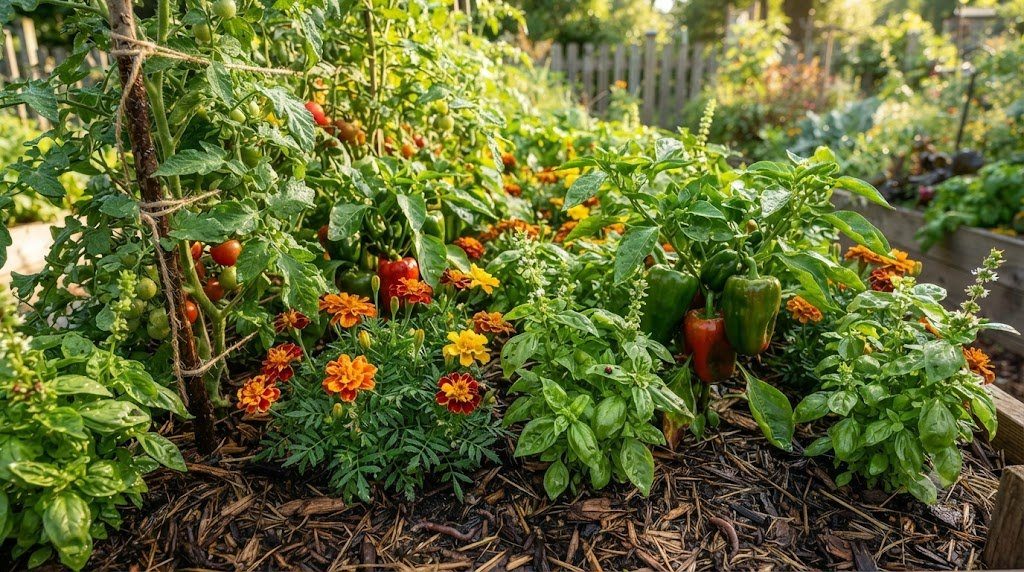
| Tomatoes (Solanum) | Sweet Basil (Ocimum basilicum) | Volatile linalool / eugenol masking; thrips deterrent | Reduces thrips feeding; attracts predatory bees | High (Peer-reviewed field trials) |
| Brassicas (Broccoli/Kale) | Sweet Alyssum (Lobularia maritima) | Shallow nectar discs attract adult hoverflies (Syrphidae) | Hoverfly larvae voraciously consume aphids | Exceptional (Standard commercial practice) |
| Squash / Cucurbits | Flowering Buckwheat / Nasturtium | Trap crop diversion; predatory ground beetle habitat | Reduces striped cucumber beetle damage | High |
| Carrots (Daucus carota) | Leeks / Onions (Allium spp.) | Allicin sulfur volatiles confuse carrot rust fly | Masks host odor; prevents maggot infestation | High |
| Beans / Legumes | Alliums (Garlic/Onions) | Allelopathic sulfur exuded by alliums inhibits Rhizobia | STUNTS legume nitrogen fixation | NEGATIVE / INCOMPATIBLE (Keep Apart!) |
Spatial Polyculture: The Ancient Three Sisters Guild
The traditional Mesoamerican ‘Three Sisters’ polyculture—interplanting Maize (Corn), Climbing Beans, and Winter Squash—is a brilliant historical model of multi-species ecological synergy:
- Corn (The Structural Trellis): Tall, rigid corn stalks grow first, providing living, vertical trellising architecture that eliminates the need for wooden bean poles.
- Beans (The Nitrogen Engine): Pole beans climb the corn stalks. Roots form symbiotic nodules with Rhizobium bacteria, biological factories that fix atmospheric nitrogen gas ($N_2$) into plant-available ammonium, feeding the heavy nitrogen demands of corn.
- Squash (The Living Weed Barrier): Prostrate squash vines spread across the soil floor, casting dense shade with massive leaves that function as a living mulch. This suppresses weed seed germination, prevents surface soil moisture evaporation, and features sharp, prickly stem trichomes that deter raccoons and deer.
Insectary Plants: Fueling the Predatory Beneficial Army
The most powerful application of companion planting is establishing dedicated insectary borders that supply nectar and pollen to adult predatory insects:
- Parasitic Wasps (Braconidae): Adult wasps are tiny (1-2mm) and possess microscopic mouthparts. They cannot feed on deep tubular flowers. Planting shallow-flowering umbellifers—such as dill, fennel, cilantro, and sweet alyssum—supplies the nectar fuel adult wasps need to parasitize tomato hornworms and aphids.
- Syrphid (Hover) Flies: Adult hoverflies resemble small yellowjackets and feed exclusively on pollen and nectar. A single hoverfly larva can devour over 400 aphids during its developmental cycle.
Designing a Polyculture Bed Layout Matrix
Never plant entire beds in uniform monoculture blocks. Interweave crops in alternating diagonal checkerboards: plant brassicas surrounded by sweet alyssum collars, tuck leeks between rows of carrots, and border nightshades with aromatic basil. This ecological mosaic makes it virtually impossible for insect pests to establish feeding footholds.
Biochemical Allelopathy: Positive Synergies and Negative Antagonisms
In plant chemical ecology, allelopathy refers to the biological phenomenon where a plant releases secondary metabolites (allelochemicals) through root exudation, foliar leaching, or residue decomposition that influence the germination, growth, and physiological performance of neighboring plants. While allelopathy can be harnessed to suppress invasive weeds, improper companion pairings can trigger severe chemical crop stunting.
The Juglone Hazard: Black Walnut Toxicity
The most notorious example of negative allelopathy is Juglone (5-hydroxy-1,4-naphthalenedione), synthesized by Black Walnut (Juglans nigra) and related trees. Juglone is an irreversible respiratory inhibitor that causes rapid wilting, vascular browning, and death in solanaceous crops (tomatoes, peppers, potatoes) planted within the tree’s root drip line. Ensure vegetable garden beds are positioned at least 50 feet away from mature walnut trees.
Alliin and Allicin Antagonism on Legume Nodulation
A critical agronomic rule frequently violated by home gardeners is planting Alliums (garlic, onions, leeks) directly adjacent to Legumes (peas, beans). Allium root exudates contain potent organosulfur compounds (principally allicin and diallyl disulfide) possessing strong antimicrobial properties. In the soil rhizosphere, these compounds actively inhibit Rhizobium bacteria, halting root nodulation and crippling the legume’s capacity to fix atmospheric nitrogen!
| Crop Pairing Combination | Allelochemical Agent | Biological Mode of Action | Observed Agronomic Outcome | Recommended Action |
|---|---|---|---|---|
| Tomatoes + French Marigolds | Alpha-terthienyl | Phototoxic subterranean nematicide | Suppresses Root-Knot Nematodes by 80% | BENEFICIAL (Interplant dense borders) |
| Beans / Peas + Onions / Garlic | Allicin & Organosulfur volatiles | Bactericidal inhibition of Rhizobium | Stunts legume growth; reduces nitrogen | ANTAGONISTIC (Separate beds) |
| Cabbage + Sweet Alyssum | Floral nectar volatiles | Attracts Syrphid fly & Braconid predators | Eliminates aphids without chemical sprays | BENEFICIAL (Highly recommended) |
| Carrots + Leeks | Allicin vs. Terpenoid masking | Reciprocal olfactory pest confusion | Deters carrot rust fly & leek moth | BENEFICIAL (Alternate single rows) |
Trap Cropping Agronomy: Sacred Sacrificial Plantings
Trap cropping is an advanced integrated pest management strategy where a highly preferred host plant is strategically grown adjacent to a cash crop to attract, intercept, and retain target insect pests, keeping them off the primary vegetable:
- Blue Hubbard Squash Trap for Cucurbits: The striped cucumber beetle (Acalymma vittatum) is the vector of fatal bacterial wilt (Erwinia tracheiphila). Research confirms that cucumber beetles find ‘Blue Hubbard’ squash dramatically more attractive than butternut squash, melons, or cucumbers. Planting a perimeter border of Blue Hubbard squash two weeks early concentrates 90% of local beetles on the trap plants, where they can be hand-collected or spot-treated.
- Collard Trap Crops for Diamondback Moths: Planting a border of rugged collards around delicate heading cabbage draws diamondback moths away from cabbage heads.
Root Stratification Architecture in Polyculture Beds
Spatial polyculture succeeds when companion crops occupy different subterranean soil horizons, preventing direct competition for water and minerals. Pair deep-rooting taproot crops (such as parsnips or heirloom tomatoes, exploring depths of 3 to 5 feet) with shallow-rooted surface scavengers (such as lettuces or radishes, feeding in the top 4 inches). This complementary root architecture fully utilizes the three-dimensional subterranean soil volume without resource conflict.
Semiochemical Ecology and Volatile Organic Compound (VOC) Profiling
Modern chemical ecology studies how plants communicate through airborne volatile organic compounds (VOCs). When a plant is attacked by herbivorous pests, it releases Herbivore-Induced Plant Volatiles (HIPVs)—such as methyl jasmonate and beta-caryophyllene. Neighboring companion plants detect these airborne chemical signals, preemptively activating defense genes and synthesizing bitter tannins before pests arrive!
Beneficial Predator Recruitment Via Floral VOCs
Interplanting flowering insectary companions (such as Sweet Alyssum, Cilantro, and Yarrow) creates an aromatic cloud of floral VOCs that serves as an acoustic beacon for predatory insects. Parasitic wasps and green lacewings follow these volatile scent trails directly into the vegetable bed, establishing permanent biological patrol forces that eradicate caterpillars and aphids before populations reach damaging levels.
| Companion Floral Partner | Dominant Volatile Terpenoid | Target Pest Herbivore Deterred | Beneficial Predator Recruited | Recommended Bed Planting Ratio |
|---|---|---|---|---|
| Sweet Alyssum (Lobularia) | Linalool & Phenylacetaldehyde | Aphids (indirect suppression) | Adult Syrphid (Hover) Flies | 1 Plant every 2 feet of brassica row |
| Culinary Thyme (Thymus) | Thymol & Carvacrol | Cabbage Looper & Flea Beetles | Braconid Parasitoid Wasps | Border edge edging along beds |
| French Marigold (Tagetes) | Alpha-terthienyl & Limonene | Root-Knot Nematodes (Soil) | Minute Pirate Bugs (Orius) | Interspersed every 3 tomato plants |
| Cilantro / Coriander | Decanal & Linalool | Spider Mites (Olfactory confusion) | Ladybird Beetles & Lacewings | Allow to bolt into flower around crops |
The Root Depth Partitioning Matrix: Eliminating Subterranean Competition
Polyculture succeeds when plant root architectures explore differing vertical soil horizons. Interplant deep-rooted taproots (such as heirloom carrots and parsnips, exploring 12 to 24 inches) with shallow fibrous-rooted leaf crops (such as lettuces and spinach, feeding in the top 3 to 6 inches). This three-dimensional spatial partitioning ensures that both crops access water and nutrients without competing for the same subterranean soil volume.
Mycorrhizal Common Mycelial Networks (CMNs) in Polycultures
One of the most profound discoveries in contemporary agroecology is that plants in a diverse polyculture are physically connected underground by Common Mycelial Networks (CMNs). Arbuscular mycorrhizal fungi colonize the root systems of multiple neighboring plant species simultaneously, forming an underground living internet.
Resource Redistribution and Early Warning Signaling
Through these shared fungal highways, carbon, phosphorus, and water are actively translocated from resource-rich mature plants to shaded understory seedlings. Furthermore, when an insect pest attacks one plant in the polyculture, the attacked plant transmits systemic chemical warning signals through the fungal network to neighboring companion plants, prompting them to synthesize defense chemicals hours before pests reach their stems!
Designing Spatial Planting Blueprints: The Concentric Ring Method
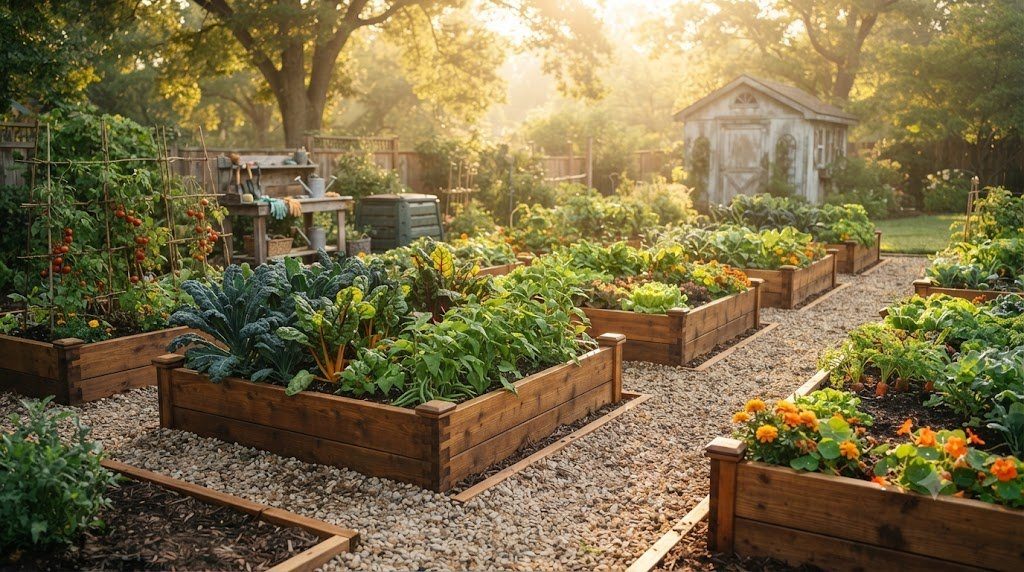
To organize companion polycultures in raised beds, implement the Concentric Ring Layout: position tall, heavy-feeding cash crops (tomatoes or corn) in the central core; encircle them with a middle ring of beneficial pest-repelling companions (basil or alliums); and border the perimeter with low-growing, shallow-rooted flowering insectaries (sweet alyssum or thyme) that cascade over bed edges, maximizing three-dimensional ecological space.
Trap Cropping Spatial Geometry and Trap-to-Crop Ratios
When deploying sacrificial trap crops (such as Blue Hubbard squash or Chinese Southern Giant mustard), maintain an agronomic trap ratio of 1 trap plant for every 10 cash crop plants. Position trap plants along the prevailing windward perimeter of the garden bed: arriving insect pests encounter and colonize the sacrificial trap border first, halting their migration before they ever reach the primary crop rows.
Empirical Garden Architecture Blueprint and Crop Succession Action Steps
A truly productive vegetable and floral garden is born long before the first seed is sown—it is conceived on paper through meticulous spatial mapping, astronomical solar analysis, microclimate engineering, and mathematically sequenced succession calendars. Treating garden design as an applied science unlocks extraordinary multi-season harvests while minimizing labor and frustration.
The Master Planning Implementation Framework
Follow these five strategic phases when designing or expanding your garden infrastructure:
- Phase 1: Solar Insolation and Aspect Audit: Map sun exposure patterns across your property during the summer solstice and autumn equinox. Allocate full-sun south-facing zones to heat-loving crops, reserving partially shaded areas for cool-season greens.
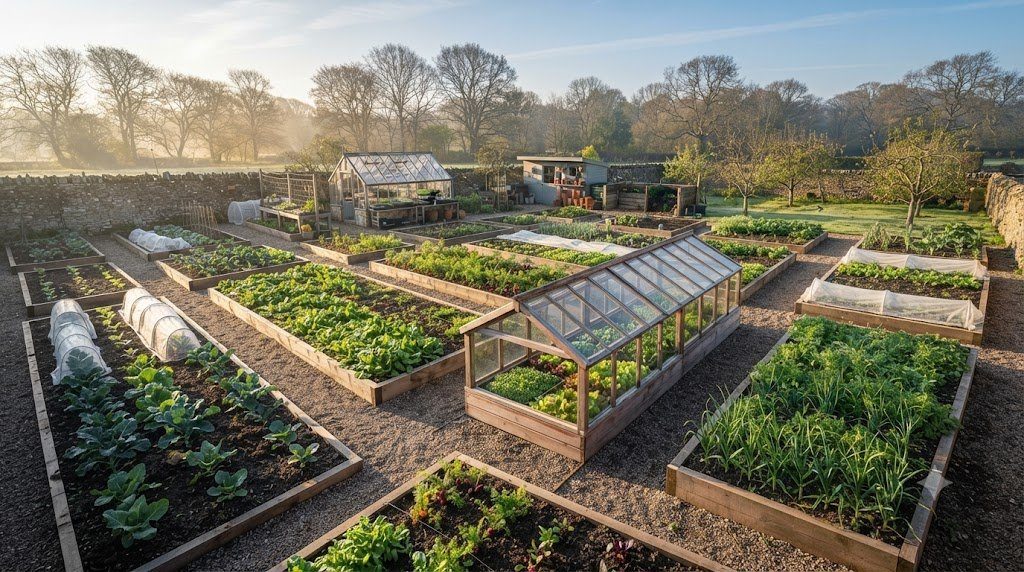
- Phase 2: Raised Bed Ergonomic Construction: Construct beds no wider than 48 inches to prevent soil compaction from foot traffic. Utilize durable, rot-resistant 2-inch timbers, line floors with galvanized hardware cloth against burrowing rodents, and leave minimum 36-inch pathways.
- Phase 3: Four-Season Succession Scheduling: Calculate autumn sowing dates backward from your first expected frost date, adding a 14-day Fall Factor to compensate for declining day-length. Plant successions in 10-to-14-day staggered intervals to maintain steady harvests.
- Phase 4: Four-Family Crop Rotation Alignment: Rotate nightshades, legumes, brassicas, and root crops systematically across four distinct beds to break soil-borne pathogen cycles and balance subterranean nutrient consumption.
- Phase 5: Polyculture Companion Guild Integration: Interweave aromatic herbs and flowering insectary strips (sweet alyssum, dill, marigolds) throughout crop beds to recruit beneficial predatory insects and disrupt pest migration patterns naturally.
By approaching garden planning with agronomic discipline, empirical data tracking, and ecological harmony, gardeners create enduring, self-sustaining landscapes that provide abundant nourishment and joy for decades to come.