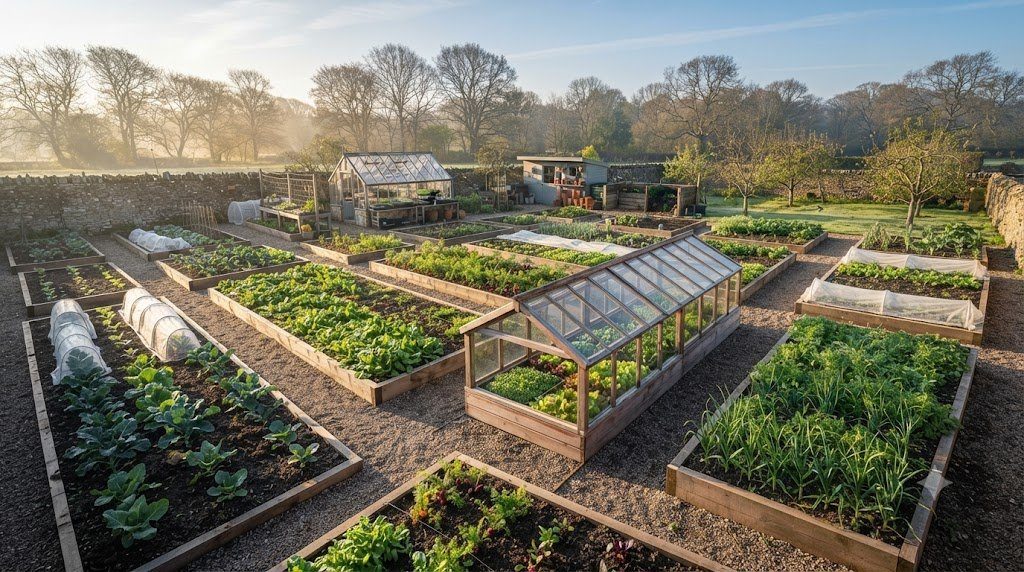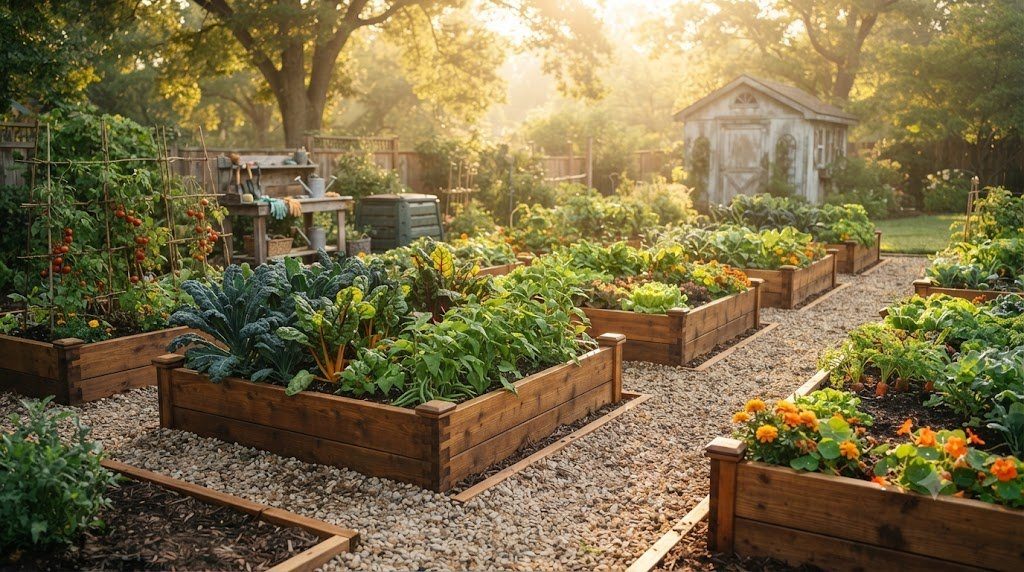
Raised bed gardening represents the gold standard of modern residential agronomy. By elevating the root rhizosphere above native ground level, gardeners gain absolute control over soil texture, fertility stoichiometry, drainage dynamics, and root zone aeration. Furthermore, raised beds eliminate human foot-traffic compaction across growing beds, warm up three to four weeks earlier in spring, and provide superior ergonomic accessibility. However, constructing raised beds that endure for decades without rotting, bowing under outward soil pressure, or leaching hazardous chemical preservatives requires an engineering mindset regarding lumber selection, structural fastening, hardware cloth rodent barriers, and path layout geometry.
Material Selection: Chemical Preservatives vs. Natural Rot Resistance
The foundational decision in raised bed construction is selecting the sidewall framing material. The material must withstand continuous subterranean contact with moist, biologically active organic soil, intense freeze-thaw cycles, and heavy outward hydrostatic pressures.
The Safety of Modern Pressure-Treated Lumber (ACQ vs. CCA)
Historically, pressure-treated lumber was preserved with Chromated Copper Arsenate (CCA), which leached toxic inorganic arsenic into garden soil and was banned for residential food production in 2003. Modern treated wood utilizes Alkaline Copper Quat (ACQ) or Micronized Copper Azole (MCA). While university agricultural extension studies confirm that copper migration from ACQ into edible vegetable tissue is agronomically negligible, many strict organic growers still prefer naturally rot-resistant untreated species.
| Lumber / Material Type | Expected Service Life | Chemical Leaching Risk | Structural Strength | Cost / Availability Ratio |
|---|---|---|---|---|
| Western Red Cedar (Thuja plicata) | 15 – 25 Years | Zero (Natural thujaplicin fungicidals) | High (Excellent dimensional stability) | High Premium |
| Black Locust (Robinia pseudoacacia) | 30 – 50+ Years | Zero (Extremely dense natural heartwood) | Exceptional (Nearly indestructible) | High / Limited Regional |
| ACQ Pressure-Treated Pine | 12 – 20 Years | Negligible (Trace elemental copper only) | High | Economical / Readily Available |
| Corrugated Galvanized / Aluzinc Steel | 20 – 30+ Years | Zero (Zinc / aluminum oxide coating) | Extremely High (Reinforced corners) | Moderate / Fast Assembly |
| Standard Untreated Douglas Fir / Pine | 3 – 5 Years | Zero | Moderate (Rapid fungal decay in soil) | Lowest / Rapid Rot Failure |
Ergonomic Geometry: Width, Height, and Pathway Dimensions
A properly engineered garden layout harmonizes human biomechanics with plant access:
- The Golden Four-Foot Width Rule: Raised beds should never exceed four feet (48 inches) in width if accessed from both sides, or two feet if positioned against a wall. An average adult reach is approximately 24 inches. Exceeding a 4-foot width forces gardeners to step onto the bed to weed or harvest, causing catastrophic compaction that ruins the entire purpose of raised beds!
- Ergonomic Bed Height: A height of 10 to 12 inches is standard and provides ample rooting depth for 90% of vegetable crops. For senior gardeners, wheelchair accessibility, or individuals with chronic back issues, beds elevated to 24 to 30 inches eliminate bending entirely.
- Pathway Width (Minimum 36 Inches): Pathways between beds must measure at least 36 to 48 inches wide. This allows a fully loaded heavy garden wheelbarrow, harvest cart, or lawnmower to pass comfortably without scraping sidewalls.
Subsurface Barriers: Hardware Cloth Against Burrowing Rodents
Subterranean rodents—principally pocket gophers, moles, and pine voles—can completely decimate a raised bed from below, tunneling upward to consume sweet potato taproots, carrot beds, and earthworms overnight. Before filling a new raised bed frame with soil, line the entire bottom floor with 0.5-inch hot-dipped galvanized hardware cloth (wire mesh). Fasten the mesh securely to the bottom edges of the wooden frame using heavy-duty galvanized staples. Plant roots effortlessly penetrate the mesh into subsoil, while rodents are permanently excluded.
The Hügelkultur Soil Filling Strategy
Filling deep 24-to-30-inch raised beds entirely with premium bagged potting soil is prohibitively expensive. Progressive growers utilize the ancient Austrian Hügelkultur method to fill lower bed horizons:
- Bottom Horizon (Lower 40%): Pack large, decomposing hardwood logs, fallen branches, and decaying tree stumps. As this buried wood slowly breaks down over 10 to 15 years, it acts as a massive subterranean sponge that absorbs spring rainwater and releases it to plant roots during summer droughts, while hosting vast colonies of beneficial mycorrhizal fungi.
- Middle Horizon (Middle 30%): Layer nitrogen-rich green materials: grass clippings, autumn leaves, un-aged compost, and straw.
- Top Growing Horizon (Top 30% / 8-12 Inches): Cap the bed with a premium, well-balanced organic blend: 40% screened compost, 40% topsoil, and 20% coarse perlite or pumice.
Corner Bracing and Long-Span Tension Ties
For beds exceeding eight feet in length, outward soil pressure will push sidewalls outward over time. Prevent structural bowing by installing internal 4×4-inch corner posts anchored with heavy-duty structural exterior timber screws (such as GRK or Spax fasteners), and install a galvanized threaded steel tie rod or cross-brace timber at the midpoint connecting opposite sidewalls at soil level.
Fastener Engineering: Shear Forces and Corrosion Metallurgy
The most common structural failure point in DIY raised garden beds is not lumber decay; it is the catastrophic failure of corner fasteners under extreme outward shear stress. Wet soil acts as a viscous fluid that exerts continuous hydrostatic pressure pushing sidewalls outward, particularly during winter freeze-thaw cycles when expanding ice exerts thousands of pounds of lateral force against corner joints.
Drywall Screws vs. Structural Timber Screws
Never assemble raised garden beds using standard black drywall screws or cheap zinc-plated wood screws! Drywall screws are made from brittle, hardened steel designed exclusively for tensile loads; under the lateral shear force of expanding wet soil, their heads will snap off cleanly within one season. Always utilize heavy-duty Structural Exterior Timber Screws (such as GRK Fasteners or Spax exterior lag screws) manufactured from case-hardened steel and coated with multi-layer corrosion-resistant polymers or Grade 305/316 Stainless Steel.
| Fastener / Joint Connection Type | Shear Strength Rating | Corrosion Resistance (in Moist Soil) | Failure Mechanism | Recommended Service Life |
|---|---|---|---|---|
| Standard Black Drywall Screws | Extremely Low (< 80 lbs) | Disastrous (Rusts through in 12 mos) | Brittle head snap under ice pressure | < 1 Season (DO NOT USE) |
| Zinc-Plated Deck Screws (3-Inch) | Moderate (180 – 250 lbs) | Moderate (Galvanic coating erodes) | Thread corrosion and joint separation | 3 – 5 Years |
| Structural Timber Lag Screws (5/16″ x 4″) | Very High (600 – 850 lbs) | High (Polymer ceramic coat) | Timber splitting if un-piloted | 15 – 25 Years (Optimal) |
| Heavy Galvanized Steel Corner Brackets | Exceptional (1,200+ lbs) | Exceptional (Hot-dipped galvanization) | Virtually Indestructible | 30+ Years (Permanent) |
Thermal Dynamics: Spring Soil Warming and Autumn Frost Buffering
Elevating soil inside raised beds alters its thermodynamic relationship with the earth. In early spring, raised bed soil is exposed to warm ambient air and solar radiation on three sides (the top surface and both exterior wooden sidewalls). Consequently, raised beds warm up to the critical 55°F seed germination threshold three to four weeks earlier than surrounding native in-ground clay soil, enabling gardeners to transplant early spring greens, radishes, and peas a month ahead of standard regional planting schedules.
However, this thermodynamic reality has an autumn corollary: because raised beds lack connection to the vast geothermal insulation of deep subsoil, they also cool down and freeze faster during severe autumn cold snaps. Counteract autumn heat loss by banking straw bales along the exterior wooden sidewalls to insulate root zones through winter.
Integrated Irrigation Plumbing: Subsurface PVC Conduit Feeds
Rather than draping messy garden hoses over raised bed wooden rims (which damage corner plants and pinch hoses), incorporate permanent plumbing during bed construction. Run a 0.75-inch rigid PVC conduit line underneath pathways, rising vertically inside the corner of each bed. Install a dedicated quarter-turn ball valve and pressure regulator at each bed, enabling independent drip zone control tailored to the specific water demands of individual crop families.
Hydrostatic Lateral Soil Pressures and Bed Bracing Mathematics
A raised garden bed functions structurally as a retaining wall. Moist topsoil exhibits a wet bulk density of approximately 75 to 90 pounds per cubic foot. In a bed that is 24 inches tall and 12 feet long, the lateral hydrostatic soil pressure pushing outward against the long sidewalls exceeds 1,200 pounds of force!
To prevent sidewalls from bowing outward into an unsightly barrel shape, install internal structural cross-ties every four feet along the length of the bed. Utilize 0.5-inch threaded galvanized steel rods with heavy fender washers and locking nuts, or 2×4-inch timber cross-struts bolted across the center of the bed below the soil line. These internal tension ties hold opposite sidewalls permanently rigid against outward pressure.
| Raised Bed Framing Lumber | Nominal Thickness | Max Span Without Bowing | Corner Fastener Requirement | Expected Structural Rigidity |
|---|---|---|---|---|
| 1×12 Rough Sawn Pine | 0.75 Inches (Too Thin!) | 3 Feet (Bows severely beyond 3ft) | Drywall screws (Fails rapidly) | Extremely Poor (Bows in 1 year) |
| 2×10 Western Red Cedar | 1.50 Inches (Heavy Timbers) | 6 Feet between supports | 4-Inch structural timber screws | High (Endures 15-20 years) |
| 2×12 ACQ Treated Pine | 1.50 Inches (Heavy Timbers) | 8 Feet between supports | 5/16″ Galvanized lag screws | Exceptional (Rigid & durable) |
| Corrugated 24-Gauge Steel | Sheet with aluminum frame | 6 Feet with corner brackets | Heavy stainless bolts | Very High (Endures 25+ years) |
Soil Horizon Layering in Ergonomic 30-Inch Beds
When constructing tall 30-inch raised beds for wheelchair or ergonomic accessibility, filling the entire volume with expensive potting mix is unnecessary. Pack the lower 14 inches with coarse organic bulk—rotting tree branches, clean cardboard, and autumn leaves. As this organic matter slowly composts over a decade, it releases continuous geothermal warmth that keeps upper root horizons active weeks earlier in spring, while saving over 50% in initial soil filling costs.
Hardware Cloth Galvanization Chemistry and Longevity
When lining the floor of a raised bed against burrowing rodents, the metallurgy of the wire mesh determines its subterranean lifespan. Standard electro-galvanized wire mesh features an ultra-thin zinc coating that rapidly corrodes within two to three seasons when exposed to moist, acidic soil microbiology.
Always specify Hot-Dipped Galvanized After Weaving (GAW) Hardware Cloth. In the GAW manufacturing process, the woven wire mesh is completely submerged in a bath of molten zinc, forming a thick, metallurgical zinc-iron alloy barrier that seals all weld joints, guaranteeing 20+ years of subterranean rodent exclusion without rusting through.
Thermal Insulation: Double-Walled Wooden Frameworks
In extreme northern climates (USDA Zones 3 and 4), severe winter freezes can penetrate single-board raised bed sidewalls, killing dormant perennial roots. High-performance northern beds utilize double-walled timber construction: framing an outer 2×10 wooden wall separated from an inner 2×10 wall by a 2-inch air gap or rigid extruded polystyrene (XPS) foam board. This thermal sandwich provides exceptional insulation, extending the autumn root growing season by nearly four weeks.
Soil Volumetric Calculation Math for Bulk Deliveries
Before ordering bulk soil mixes for newly constructed raised beds, calculate required cubic yardage using this standardized civil engineering formula:
Cubic Yards = (Length in Feet * Width in Feet * Depth in Feet) / 27
Always add a 15% settling surcharge to your final bulk soil calculation. Within four weeks of initial watering, fluffy compost and topsoil naturally settle by 2 to 3 inches as microscopic air voids consolidate under gravity.
Empirical Garden Architecture Blueprint and Crop Succession Action Steps
A truly productive vegetable and floral garden is born long before the first seed is sown—it is conceived on paper through meticulous spatial mapping, astronomical solar analysis, microclimate engineering, and mathematically sequenced succession calendars. Treating garden design as an applied science unlocks extraordinary multi-season harvests while minimizing labor and frustration.
The Master Planning Implementation Framework
Follow these five strategic phases when designing or expanding your garden infrastructure:
- Phase 1: Solar Insolation and Aspect Audit: Map sun exposure patterns across your property during the summer solstice and autumn equinox. Allocate full-sun south-facing zones to heat-loving crops, reserving partially shaded areas for cool-season greens.
- Phase 2: Raised Bed Ergonomic Construction: Construct beds no wider than 48 inches to prevent soil compaction from foot traffic. Utilize durable, rot-resistant 2-inch timbers, line floors with galvanized hardware cloth against burrowing rodents, and leave minimum 36-inch pathways.
- Phase 3: Four-Season Succession Scheduling: Calculate autumn sowing dates backward from your first expected frost date, adding a 14-day Fall Factor to compensate for declining day-length. Plant successions in 10-to-14-day staggered intervals to maintain steady harvests.
- Phase 4: Four-Family Crop Rotation Alignment: Rotate nightshades, legumes, brassicas, and root crops systematically across four distinct beds to break soil-borne pathogen cycles and balance subterranean nutrient consumption.
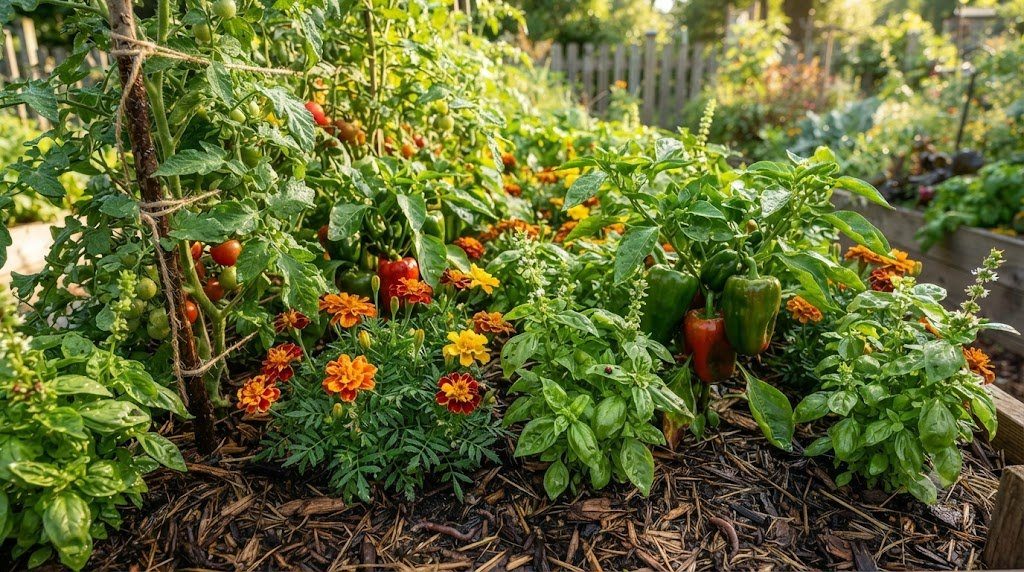
- Phase 5: Polyculture Companion Guild Integration: Interweave aromatic herbs and flowering insectary strips (sweet alyssum, dill, marigolds) throughout crop beds to recruit beneficial predatory insects and disrupt pest migration patterns naturally.
By approaching garden planning with agronomic discipline, empirical data tracking, and ecological harmony, gardeners create enduring, self-sustaining landscapes that provide abundant nourishment and joy for decades to come.