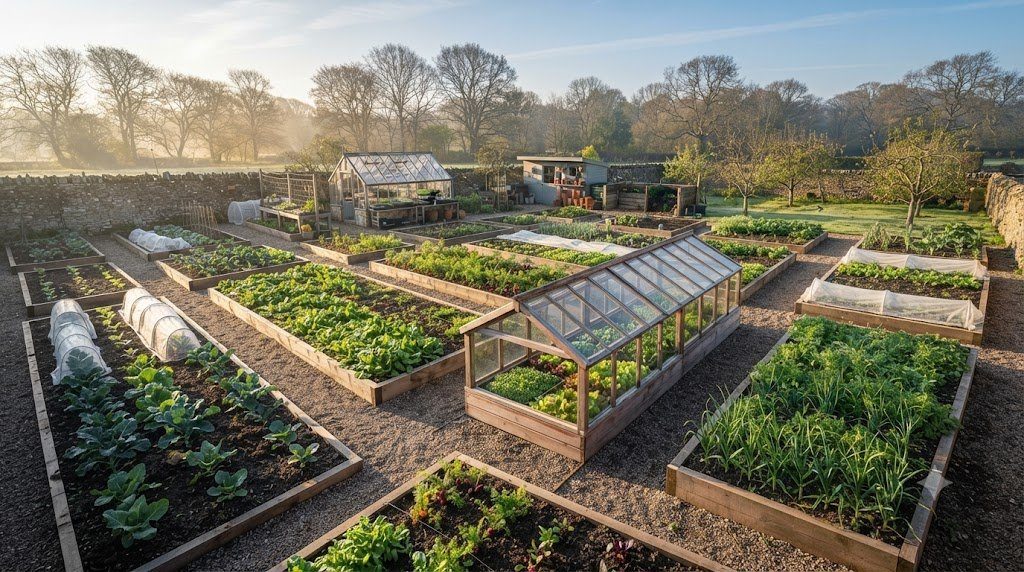
When gardeners look up their location on the official USDA Plant Hardiness Zone Map, they receive a broad, macro-climatic average based strictly on the average annual extreme minimum winter temperature across hundreds of square miles. However, plant physiology does not operate on regional averages. Within the physical boundaries of an ordinary residential property, diverse topography, structural thermal mass, tree canopies, fencing, and prevailing winds create distinct, localized microclimates. A south-facing brick wall can simulate a climate two full USDA hardiness zones warmer than the official regional rating, while a sunken, unshaded north-facing hollow can harbor a frost pocket two zones colder. Mapping and engineering these microclimates is the ultimate secret to unlocking extraordinary garden productivity.
The Biophysics of Solar Insolation and Aspect Topography
The primary driver of any microclimate is solar insolation—the total quantity of electromagnetic solar radiation striking a specific surface area over time. In the Northern Hemisphere, the geographic orientation (aspect) and slope angle of your property dictate solar energy reception:
South-Facing Slopes: The Solar Engine
South-facing land slopes and walls receive maximum incident solar radiation at perpendicular angles throughout the year, especially during early spring and late autumn when the sun sits low on the horizon. Soil on south slopes warms up weeks earlier in spring, accelerating seed germination velocities and extending the autumn growing window. South-facing zones are the premier locations for heat-loving, high-energy crops such as heirloom tomatoes, eggplants, peppers, melons, and sweet potatoes.
North-Facing Slopes: The Cool Shade Refuge
Conversely, north-facing slopes and the shadow cast behind two-story homes receive minimal direct winter and early-spring sunlight. Soils remain cold, wet, and sluggish. However, in mid-summer heatwaves, north-facing microclimates provide a blessed cool refuge where cool-season crops—such as crisphead lettuces, spinach, radishes, and cilantro—can be cultivated without prematurely bolting (flowering) and becoming bitter.
Thermal Mass Engineering: Creating Artificial Heat Sinks
Thermal mass refers to the physical capacity of dense materials to absorb, store, and slowly release heat energy, smoothing out extreme diurnal temperature swings between midday peaks and midnight chills:
| Thermal Mass Material | Specific Heat Capacity ($J/g \cdot ^\circ C$) | Volumetric Heat Storage | Effective Nighttime Heat Radius | Best Garden Implementation |
|---|---|---|---|---|
| Water (Barrels / Reservoirs) | 4.18 (Exceptionally High) | High (1.0 cal/cm³) | 3 – 5 Feet (Gentle, steady release) | Dark 55-gal water barrels inside greenhouses/tunnels |
| Dense Masonry / Brick / Stone | 0.84 – 0.92 | Moderate (0.5 cal/cm³) | 1 – 3 Feet (Direct radiative warmth) | South-facing brick walls espaliered with figs/peaches |
| Concrete Patio Pavers | 0.88 | Moderate | 1 – 2 Feet | Base flooring beneath container citrus and nightshades |
| Dry Sandy Topsoil | 0.80 | Extremely Low | Negligible | Cools instantly at night (Prone to frost) |
Windbreak Aerodynamics and Transpirational Shielding
Persistent prevailing winds are an invisible thief in the vegetable garden. Wind severely impairs plant performance through three distinct physical mechanisms:
- Thermal Stripping (Convective Cooling): Wind continuously strips the thin, insulating boundary layer of warm air surrounding plant leaves, cooling plant tissue below optimal metabolic thresholds.
- Elevated Transpiration Stress: High-velocity airflow across leaf stomata drives excessive moisture loss, triggering stomatal closure and halting photosynthesis even in fully watered soils.
- Mechanical Thigmotropism: Physical stem flexing under wind induces hormonal ethylene production, resulting in stunted, thick-stemmed, dwarf plants with reduced yield.
Permeable vs. Solid Windbreaks
A common error is erecting a solid wooden privacy fence to block wind. Aerodynamics proves that wind striking a solid vertical barrier creates a high-pressure zone that curls over the top, generating violent, turbulent downdrafts and vortices on the leeward garden side! The ideal windbreak is semi-permeable (40% to 50% porosity)—such as a living hedge of native shrubs (e.g., elderberry, hazelnut) or permeable wooden lattice. A semi-permeable windbreak gently filters and slows wind velocity, creating a tranquil microclimate extending downwind for a distance equal to ten to fifteen times the height of the barrier!
Frost Pockets and Cold Air Drainage Hydraulics
Cold air is physically denser and heavier than warm air. On calm, clear radiation-frost nights, cold air flows down slopes and hillsides exactly like water, pooling in depressions, low valleys, and behind solid fences at the bottom of a slope. These low spots are frost pockets, experiencing killer frosts weeks before upper slopes. Never position tender fruit trees or early spring vegetable beds in low frost pockets; ensure solid fences at the bottom of slopes feature open gates or bottom gaps to allow cold air to drain away freely down-gradient.
Microclimate Synthesis: Putting It All Together
By synthesizing sun mapping, thermal mass placement, permeable windbreak shelter, and cold air drainage, an astute gardener transforms a challenging suburban yard into an optimized horticultural mosaic. Plant heat-demanding Mediterranean herbs and figs against south-facing stone walls; place main raised vegetable beds in sunny, wind-sheltered mid-slopes; and reserve cool, shaded north borders for tender salads and woodland perennial ephemerals.
Thermal Radiation Physics: Emissivity and Nighttime Blackbody Cooling
A critical phenomenon in microclimate thermodynamics is radiative blackbody cooling. On clear, cloudless nights with zero wind, all physical objects (plant foliage, soil, rooftops) continuously radiate infrared heat energy outward into the cold vacuum of outer space. Because space is essentially at absolute zero (-459°F / -273°C), objects can cool to temperatures several degrees colder than the surrounding ambient air!
The Cloud Cover Blanket Effect
When cloud cover is present, water droplets in clouds absorb infrared radiation and re-radiate thermal energy back toward the earth, acting as an insulating blanket. On clear radiation-frost nights, however, leaf temperatures can plunge to 28°F, suffering fatal cellular freeze damage even when official airport thermometers mounted on weather towers report an ambient air temperature of 35°F! Understanding radiative cooling explains why a simple spun-bond fabric row cover or light cotton bedsheet suspended over plants prevents frost damage: it does not ‘warm’ the plant with electric heat; it physically intercepts and reflects back the plant’s radiated infrared heat!
| Microclimate Landscape Element | Thermal Modification Mechanism | Temperature Differential (°F) | Horticultural Opportunity | Potential Risk Factor |
|---|---|---|---|---|
| South-Facing Masonry Wall | Thermal mass heat storage & re-radiation | +5°F to +10°F night boost | Grow Zone 8 figs/peaches in Zone 6 | Midday heat scorch; rapid moisture loss |
| Sunken Garden Hollow / Valley | Cold air drainage gravity pooling | -4°F to -8°F frost pocket | Chill-hour fulfillment for apples | Early autumn & late spring killer frosts |
| Dense Overhead Tree Canopy | Intercepts radiative cooling to night sky | +3°F to +6°F frost buffer | Winter protection for tender perennials | Root competition & 60% shade reduction |
| Water Feature / Reflective Pond | High specific heat & solar reflection | +2°F to +4°F moderate buffer | Reflects low spring sun into beds | Attracts nocturnal insect pests |
Espalier Fruit Training: Thermal Conduction Against Masonry Walls
The ancient European art of espalier—pruning and training woody fruit trees (apples, pears, peaches, figs) to grow flat in a two-dimensional geometric plane against a south- or west-facing brick or stone wall—is the ultimate horticultural application of microclimate engineering. Heavy masonry absorbs immense solar energy during the day and gently conducts infrared heat into the espaliered branches and fruit throughout the night. This thermal boost elevates fruit sugar accumulation (brix) by 2 to 4 degrees, accelerates ripening by two weeks, and enables northern gardeners to ripen late-season cultivars that would otherwise fail before winter.
Constructing Sun Pits and Walipini Underground Greenhouses
For ambitious growers in extreme northern climates, excavating a sunken Walipini (underground solar greenhouse) leverages the constant geothermal warmth of the earth (which remains at 50°F to 55°F year-round 6 feet below the surface). With a transparent glazed roof facing south at an angle matched to the winter sun, a Walipini enables year-round production of citrus, greens, and root crops with zero artificial heating through sub-zero blizzards.
Solar Radiation Geometry: Zenith Angles and Seasonal Azimuth Paths
Understanding microclimate thermodynamics requires mastering solar geometry. The sun’s path across the sky changes dramatically between seasons. On the summer solstice (June 21), the sun reaches a high solar elevation angle (zenith angle exceeding 70 degrees in temperate latitudes), casting short shadows directly beneath buildings and fences.
The Low Winter Sun and the Deep Shadow Shadow Zone
Conversely, on the winter solstice (December 21), the solar elevation angle plunges to just 25 to 30 degrees above the southern horizon. A standard six-foot-tall wooden privacy fence or single-story garage casts an immense, elongated shadow extending 15 to 20 feet to the north! Garden beds positioned in this winter shadow zone receive zero direct solar insolation for four consecutive months, creating frozen permafrost microclimates that freeze root crops solid. Conducting seasonal shadow mapping ensures cold-frame tunnels are positioned in unshaded solar sweet spots.
| Seasonal Calendar Marker | Solar Elevation Angle (Approx.) | Shadow Length from 6-Ft Fence | Primary Microclimatic Impact | Optimal Crop Positioning |
|---|---|---|---|---|
| Summer Solstice (June 21) | 70° – 75° (High overhead) | 1.5 – 2.0 Feet (Short shadow) | Intense solar insolation across entire yard | Heat crops (Tomatoes, Peppers, Melons) |
| Spring / Fall Equinox (Mar / Sep) | 45° – 50° | 5.0 – 6.0 Feet (Moderate shadow) | South-facing walls warm up rapidly | Succession brassicas & root vegetables |
| Winter Solstice (Dec 21) | 25° – 30° (Low southern arc) | 12.0 – 16.0 Feet (Deep shadow!) | North zones freeze solid; south walls warm | Position cold frames strictly along south wall |
Thermal Mass Engineering: Maximizing Specific Heat in Cold Frames
To create a freeze-proof winter cold frame without electric heaters, incorporate passive thermal mass water storage. Water possesses the highest specific heat capacity of any common material ($4.18\ J/g \cdot ^\circ C$). Painting one-gallon plastic jugs or 55-gallon drums matte black and filling them with water inside cold frames absorbs solar radiation during sunny winter days. Throughout freezing nights, the water slowly releases stored latent heat, keeping interior air temperatures 8°F to 12°F above exterior sub-zero temperatures, shielding winter greens from frost damage.
Nocturnal Cold Air Inversions and Drainage Valve Gates
On still, clear nights, radiational cooling creates a dramatic cold air drainage inversion. Cold air behaves like dense liquid water, flowing down topography and pooling in the lowest hollows. If a solid wooden privacy fence runs across the bottom of a slope, it acts as a dam that blocks cold air, creating an artificial frost pocket where temperatures plunge 8°F colder than the top of the yard.
Installing Cold Air Relief Gates
Remediating this frost pocket requires installing a cold air drainage relief gate: replace solid bottom fence panels with open decorative lattice, or install an open mesh gate at the lowest elevation point. This allows cold air to drain away freely down-gradient, preventing frost from settling over sensitive early spring and late autumn vegetable beds.
Creating Thermal Microclimate Havens with Stone Berms
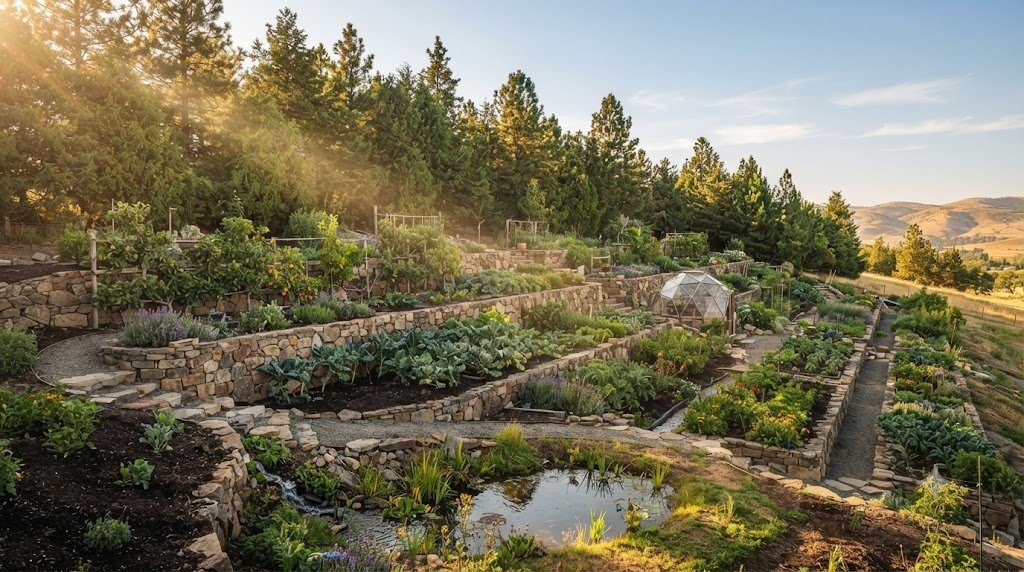
Constructing raised stone garden berms oriented along an east-west axis creates exceptional thermal microclimates. The stone retaining wall absorbs direct solar insolation along its south-facing face, radiating heat into the bed throughout cool nights. Plant cold-sensitive, high-value perennial herbs (rosemary, thyme, sage) and dwarf fruit along the stone wall to ensure vigorous multi-season winter survival.
Wind Turbulence Dissipation with Aerodynamic Living Hedges
When establishing living windbreaks, select a multi-tier mixture of deciduous and evergreen native shrubs (such as elderberry, serviceberry, and American plum). A staggered multi-row living hedge filters wind smoothly, eliminating ground-level turbulence while providing rich nectar corridors for native pollinating bees and overwintering habitat for insectivorous birds.
Empirical Garden Architecture Blueprint and Crop Succession Action Steps
A truly productive vegetable and floral garden is born long before the first seed is sown—it is conceived on paper through meticulous spatial mapping, astronomical solar analysis, microclimate engineering, and mathematically sequenced succession calendars. Treating garden design as an applied science unlocks extraordinary multi-season harvests while minimizing labor and frustration.
The Master Planning Implementation Framework
Follow these five strategic phases when designing or expanding your garden infrastructure:
- Phase 1: Solar Insolation and Aspect Audit: Map sun exposure patterns across your property during the summer solstice and autumn equinox. Allocate full-sun south-facing zones to heat-loving crops, reserving partially shaded areas for cool-season greens.
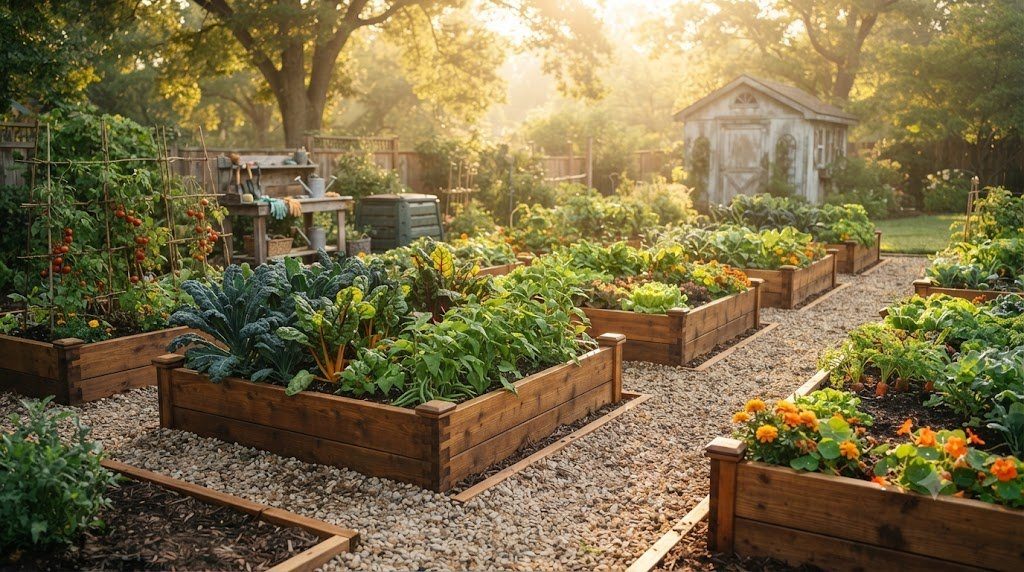
- Phase 2: Raised Bed Ergonomic Construction: Construct beds no wider than 48 inches to prevent soil compaction from foot traffic. Utilize durable, rot-resistant 2-inch timbers, line floors with galvanized hardware cloth against burrowing rodents, and leave minimum 36-inch pathways.
- Phase 3: Four-Season Succession Scheduling: Calculate autumn sowing dates backward from your first expected frost date, adding a 14-day Fall Factor to compensate for declining day-length. Plant successions in 10-to-14-day staggered intervals to maintain steady harvests.
- Phase 4: Four-Family Crop Rotation Alignment: Rotate nightshades, legumes, brassicas, and root crops systematically across four distinct beds to break soil-borne pathogen cycles and balance subterranean nutrient consumption.
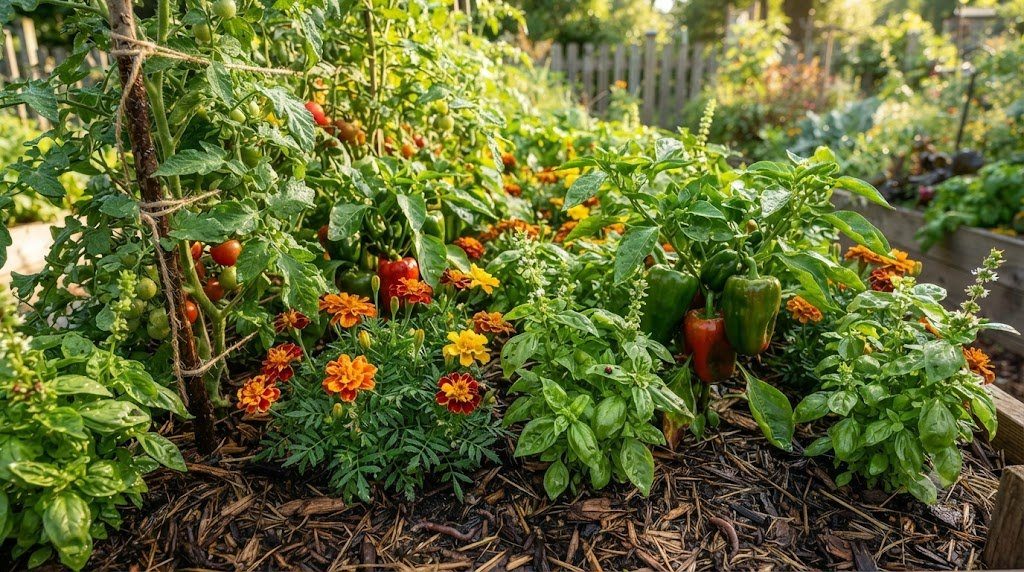
- Phase 5: Polyculture Companion Guild Integration: Interweave aromatic herbs and flowering insectary strips (sweet alyssum, dill, marigolds) throughout crop beds to recruit beneficial predatory insects and disrupt pest migration patterns naturally.
By approaching garden planning with agronomic discipline, empirical data tracking, and ecological harmony, gardeners create enduring, self-sustaining landscapes that provide abundant nourishment and joy for decades to come.